Identification guide

Wasps & Hornets in Utah: What You're Actually Finding

Six species account for nearly every stinging-insect call we run along the Wasatch Front. Here's how to tell them apart, where they nest, and which ones are actually dangerous.

Salt Lake County · Utah County · Wasatch Front

Utah Wasp & Hornet Identification

Utah doesn't have true hornets in the European sense, but we have plenty of hornet-sized wasps that behave like them. Correctly identifying what's nesting on your property matters. A paper wasp under an eave is a very different problem than a yellowjacket colony inside a wall.

Look at the waist

Short, tucked-in waist = yellowjacket or bald-faced hornet. Long dangling legs and a slender waist = paper wasp or mud dauber.

Find the nest

Open umbrella comb = paper wasp. Gray football hanging in a tree = bald-faced hornet. Hole in the ground with steady traffic = yellowjacket. Mud tubes on a wall = mud dauber.

Watch the behavior

Wasps hovering around trash cans and soda cans are yellowjackets. Wasps calmly working a nest under an eave are almost always paper wasps.

Use the six profiles below to match what you're seeing. Each covers size, distinguishing features, nesting behavior, and where our technicians most often encounter them in Salt Lake and Utah County homes.

A quick note on "murder hornets"

The Asian giant hornet (Vespa mandarinia) is not established in Utah and has never been confirmed here. Ninety-nine percent of "giant hornet" sightings along the Wasatch Front turn out to be cicada killers, bald-faced hornets, or unusually large European paper wasp queens in early spring.

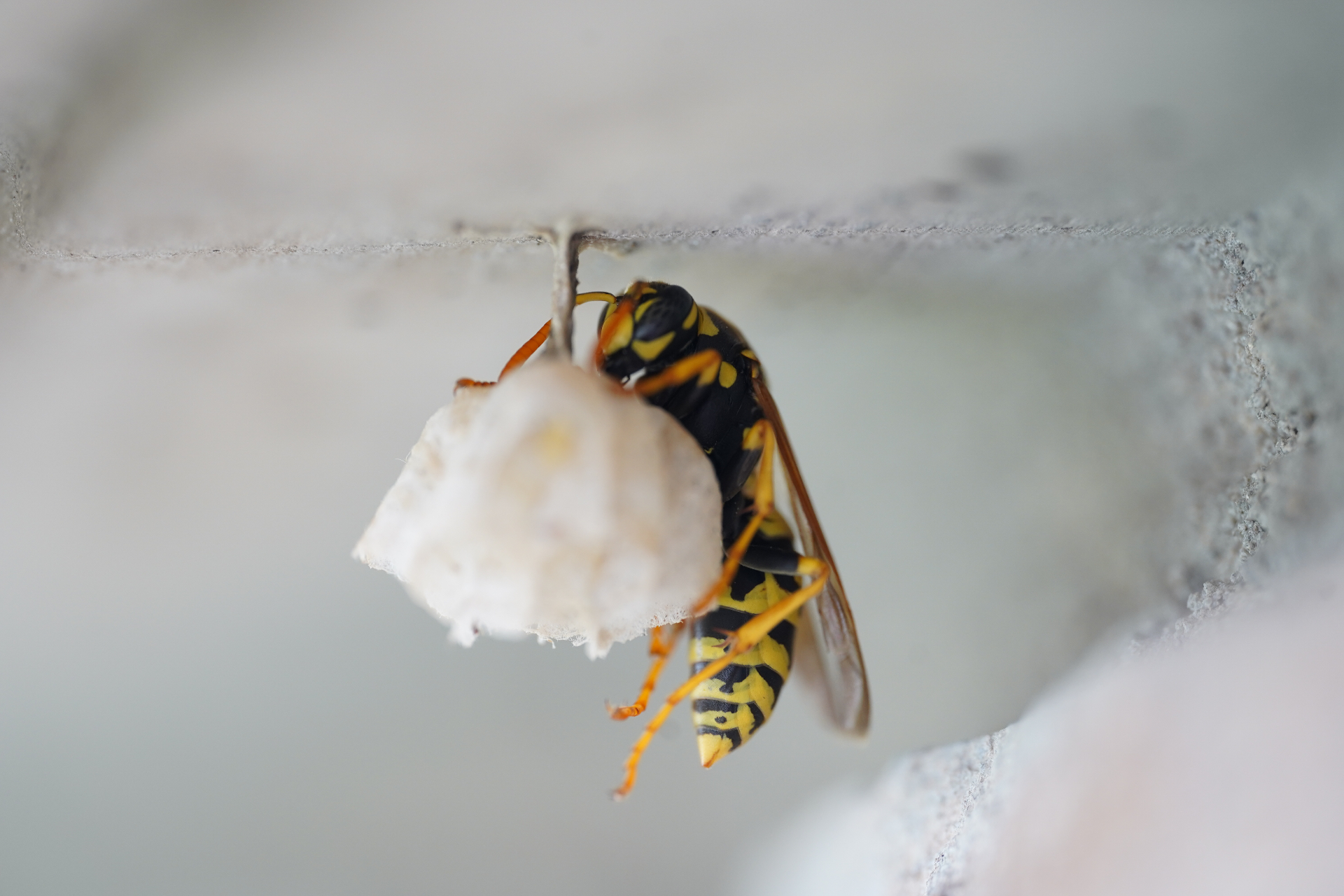
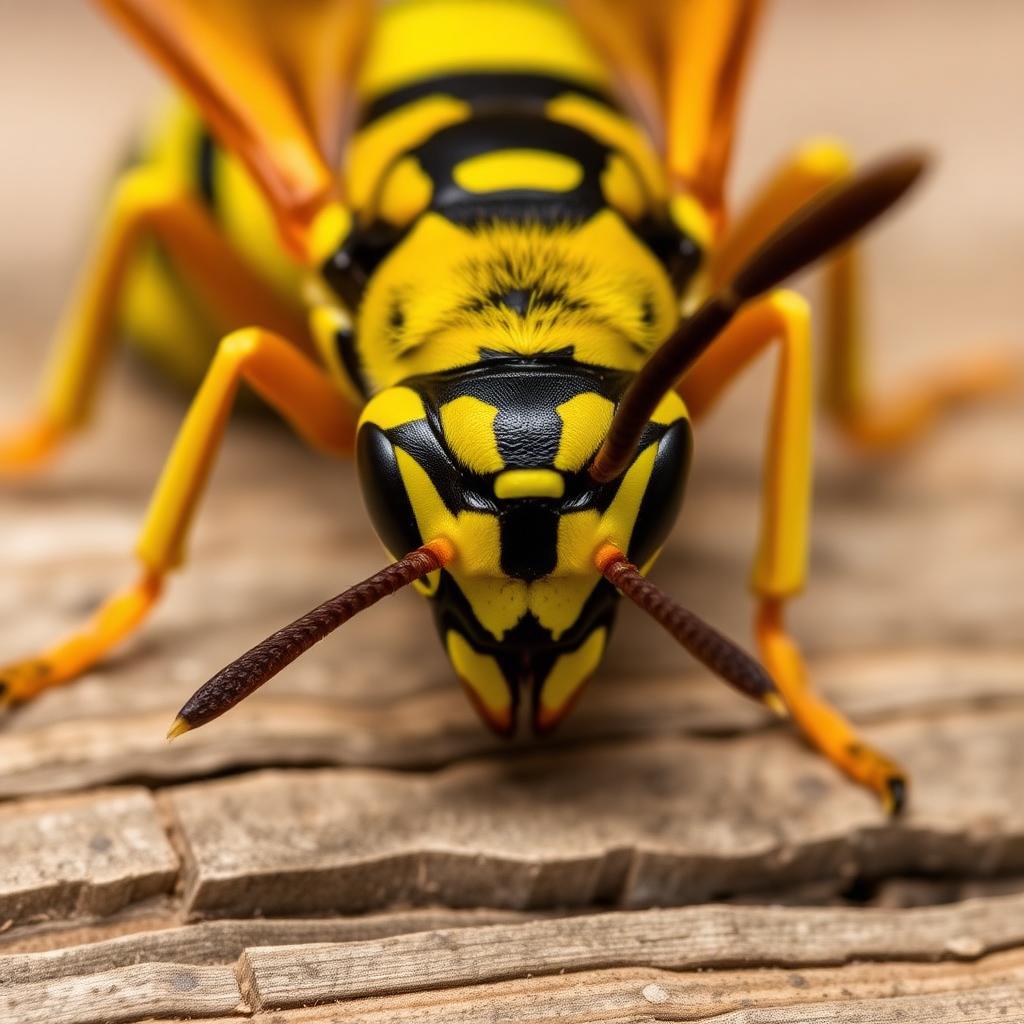
Western Yellowjacket (Vespula pensylvanica)

Western Yellowjacket

Vespula pensylvanica
Aggressive stinger
Size
Workers ~1/2 inch
How to identify
Short, stocky body with bright yellow and black bands and a tucked-in waist (much shorter than a paper wasp). Fast, jerky flight. Attracted to meat, sugar, and open soda cans. The wasp ruining your late-summer barbecue is almost always this one.
Where it nests
Builds large paper nests underground in abandoned rodent burrows, or hidden inside wall voids, attics, and landscape retaining walls. You usually see a steady stream of workers coming and going from a single hole, not the nest itself.
Where we see it locally
The #1 wasp call along the Wasatch Front from mid-July through first frost. Colonies can reach several thousand workers by August.
Bald-Faced Hornet (Dolichovespula maculata)

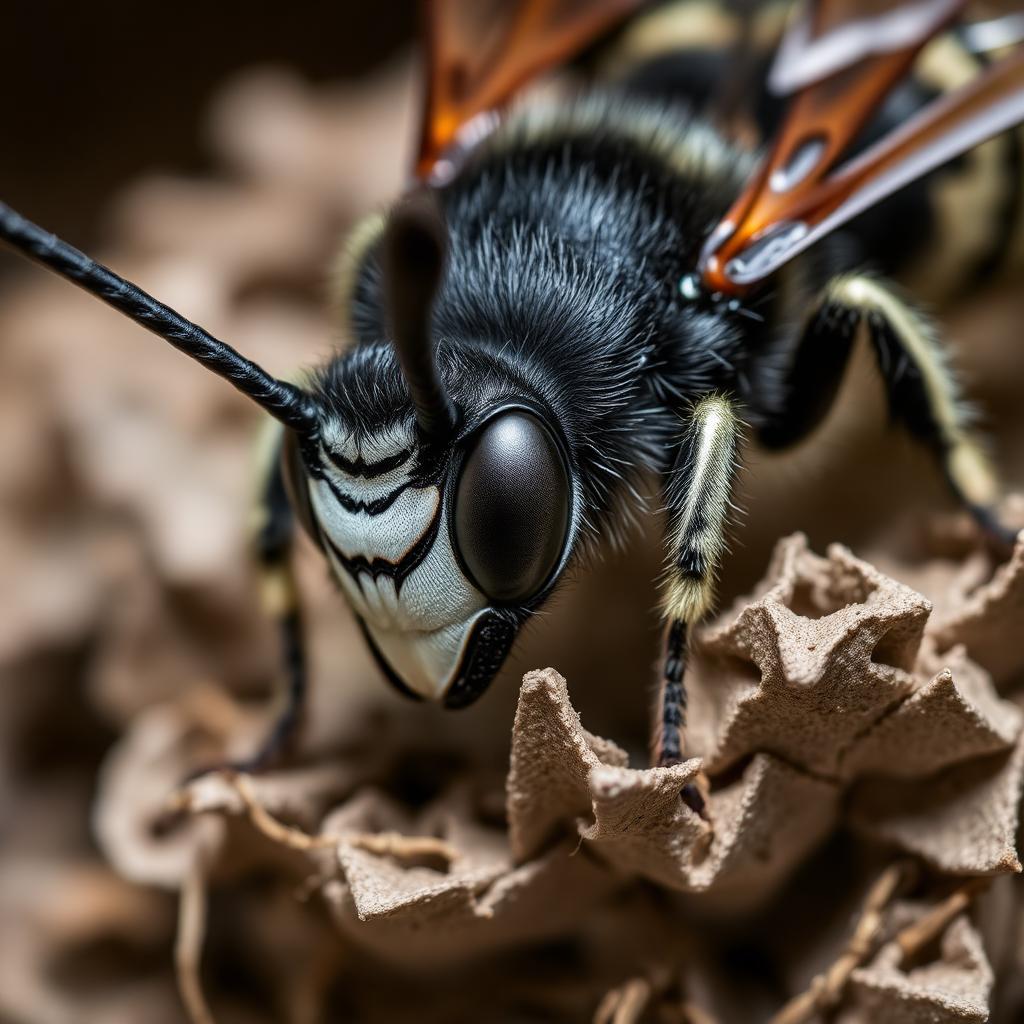
Bald-Faced Hornet

Dolichovespula maculata
Aggressive stinger
Size
Workers ~3/4 inch; queens up to 1 inch
How to identify
Not a true hornet it is actually a large aerial yellowjacket. Jet-black body with striking ivory-white markings on the face, thorax, and rear of the abdomen. Larger and more intimidating than a yellowjacket, and will defend the nest from many feet away.
Where it nests
Builds the classic gray, football-shaped paper nest suspended from a tree branch, eave, or shrub that are often 3–10 feet off the ground. A single visible entrance hole at the bottom.
Where we see it locally
Common in foothill neighborhoods with mature trees. Nests are frequently discovered by homeowners trimming trees in late summer.
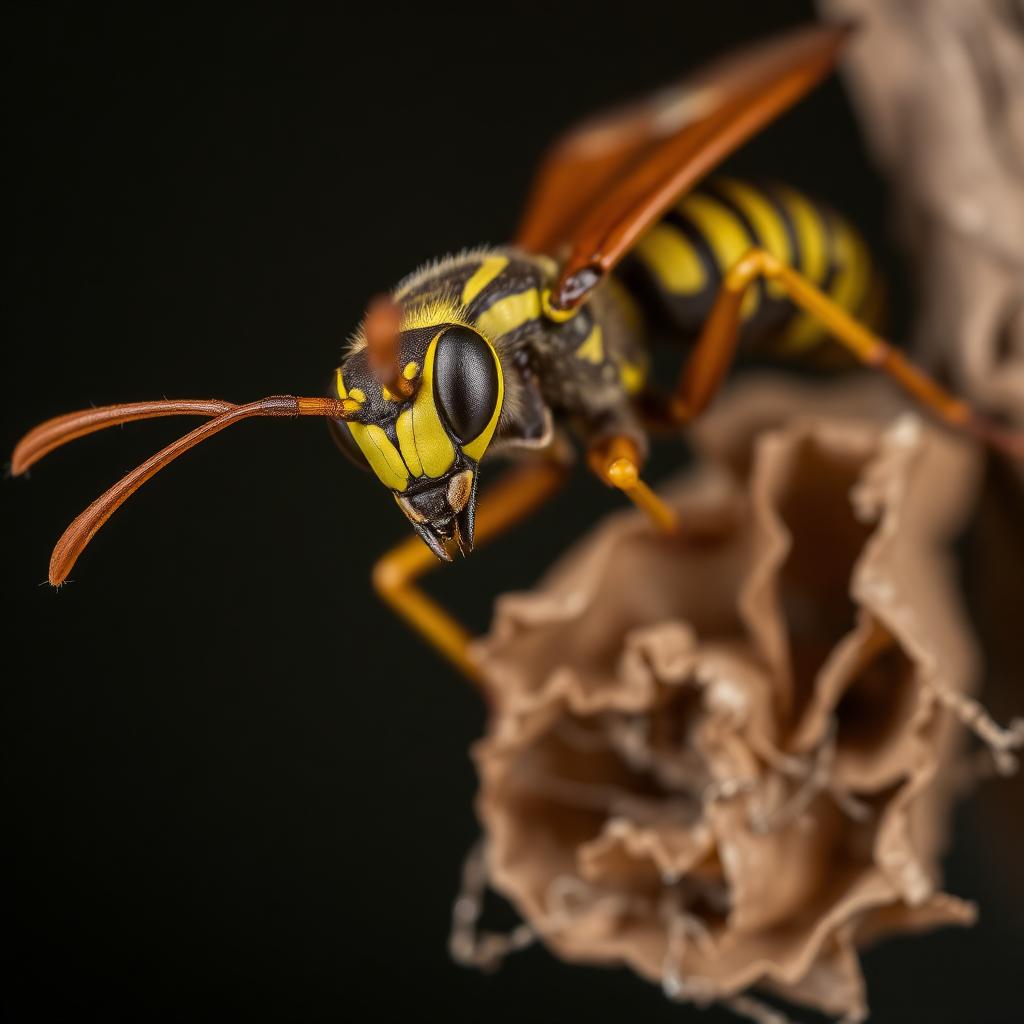
European Paper Wasp (Polistes dominula)

European Paper Wasp

Polistes dominula
Defensive
Size
Workers ~5/8–3/4 inch
How to identify
Slender body with bright yellow and black stripes and orange-tipped antennae (the antenna color separates it from a yellowjacket at a glance). Long legs that dangle in flight. Introduced species that has largely displaced the native western paper wasp in Utah suburbs.
Where it nests
Builds an open, umbrella-shaped paper nest with visible hexagonal cells without an outer paper envelope. Loves protected voids: under eaves, inside grill covers, patio umbrellas, playhouse roofs, mailbox posts, and open pipe ends.
Where we see it locally
The wasp you find nesting inside your barbecue in April. Queens overwinter in attics and window frames and start new nests as soon as temperatures hit the 60s.
Western Paper Wasp (Mischocyttarus flavitarsis)

Western Paper Wasp

Mischocyttarus flavitarsis
Defensive
Size
Workers ~3/4 inch
How to identify
Native paper wasp that are longer and more slender than the European species, with a mostly brown body and yellow markings. Long yellow legs trail noticeably behind in flight. Generally less aggressive than yellowjackets or bald-faced hornets.
Where it nests
Small open-comb paper nests tucked under eaves, in rock outcrops, and inside sheds and detached garages. Colonies stay small, usually a few dozen wasps.
Where we see it locally
Less common in Salt Lake and Utah County suburbs than it used to be, but still shows up in rural foothill properties and along the benches.
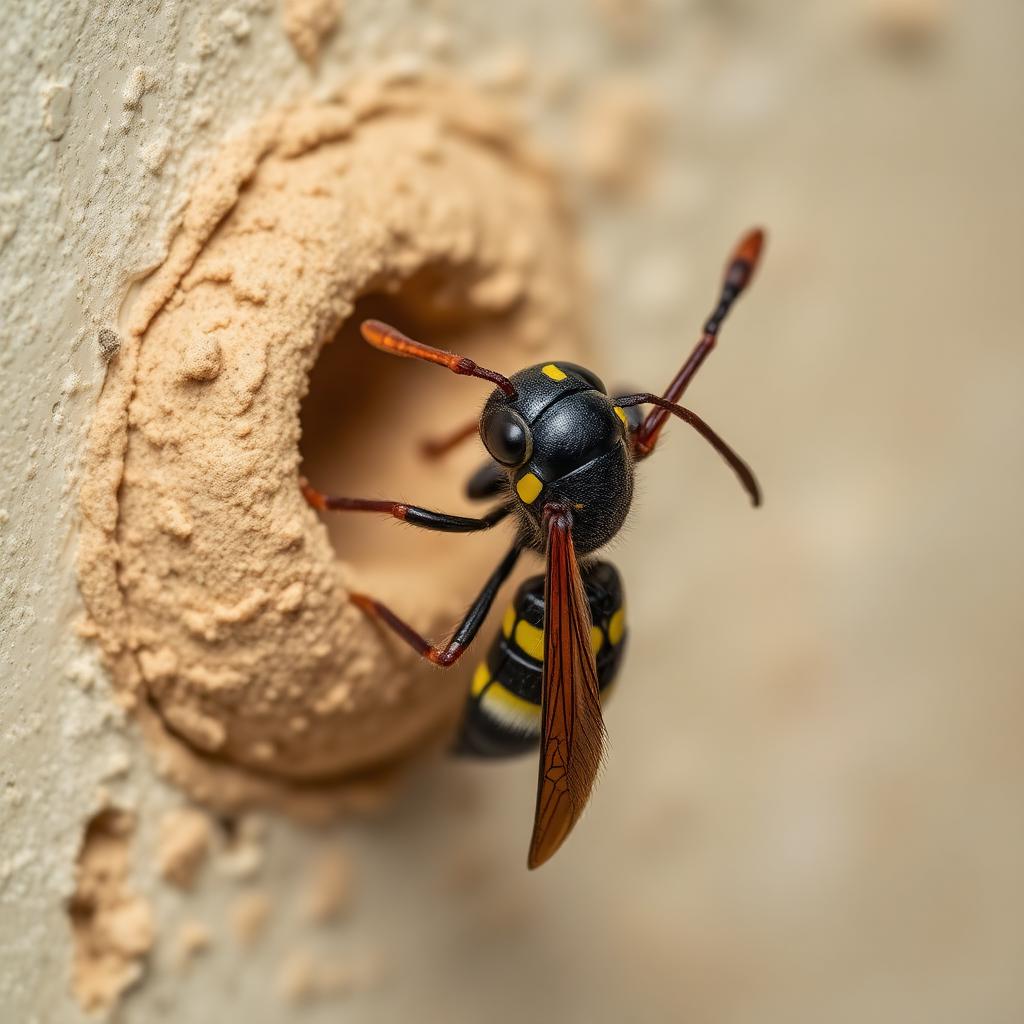
Black & Yellow Mud Dauber (Sceliphron caementarium)

Black & Yellow Mud Dauber

Sceliphron caementarium
Docile
Size
Body ~1 inch, very slender
How to identify
Long, thread-thin waist with a black body and bright yellow markings on the legs and thorax. Solitary — no colony to defend, so stings are rare. Preys on spiders (including black widows), which it paralyzes and seals inside its mud tubes.
Where it nests
Builds distinctive tubular mud nests of parallel pipes cemented together on protected vertical surfaces: garage walls, sheds, under eaves, inside attics. Old nests are often reused by other wasps and bees.
Where we see it locally
Beneficial and easy to leave alone unless the nest is somewhere disruptive. Old abandoned mud tubes are safe to scrape off in winter.
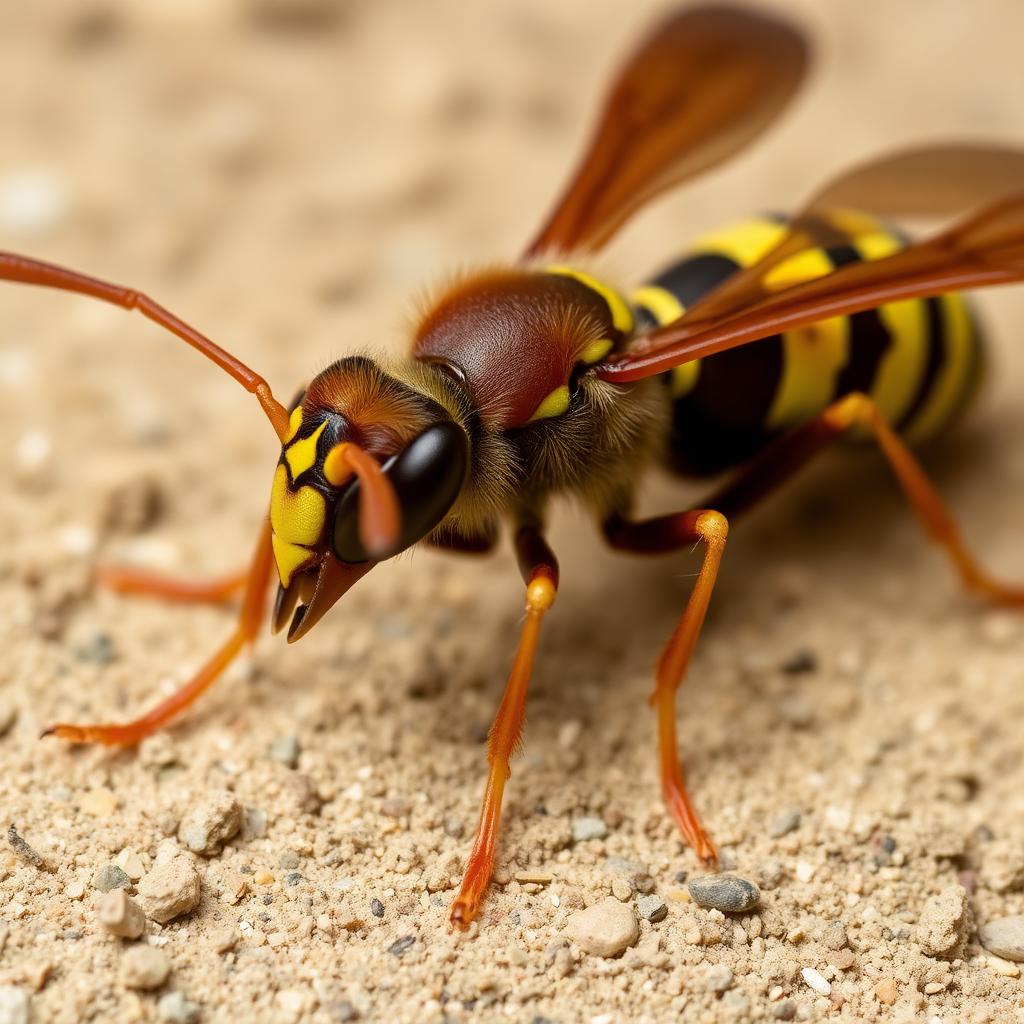
Western Cicada Killer (Sphecius grandis)

Western Cicada Killer

Sphecius grandis
Docile
Size
Females up to 1.5 inches, one of the largest wasps in Utah
How to identify
Massive reddish-brown and yellow wasp that looks alarming but is essentially harmless to people. Solitary hunter that paralyzes cicadas and drags them back to a burrow. Males patrol territorially and can dive-bomb humans but have no stinger.
Where it nests
Digs burrows in bare, sandy or loose soil often in south-facing slopes, sand traps, exposed flower beds, and along foundations with poor turf cover. Look for a tennis-ball-sized mound of excavated dirt with a single entry hole.
Where we see it locally
Peaks in late July and August, especially in Utah County and along the west desert. Frequently misidentified as an 'Asian giant hornet' (murder hornet) that are not established anywhere in Utah.

Why Utah homes attract wasps and hornets

The Wasatch Front's warm dry summers, protected eaves, and abundance of rodent burrows create ideal nesting conditions. Wasp pressure builds slowly from May through July, then explodes in August and September when colonies peak and food sources outdoors start to dry up — which is exactly when they start crashing your barbecue.

The three things that cut wasp activity fastest

  • Knock down early paper-wasp starter nests in April and May before the queen raises her first workers. One five-minute pass in spring prevents a full summer colony.
  • Seal gaps in soffits, fascia, siding, and around utility penetrations — yellowjackets need only a pencil-width opening to build inside a wall void.
  • Keep trash-can lids sealed and rinse recyclables. A single sticky soda can in an open bin will pull yellowjackets from a hundred yards away.

Wasp nest on your property?

Send us a photo — we'll ID the species and let you know whether it warrants a treatment or can be safely left alone. Our stinging-insect service covers nest removal, eave treatment, and a preventative perimeter tuned to Utah's wasp pressure.