← Blog

Spiders in Utah: What You're Actually Finding

Six species make up almost every spider call we run along the Wasatch Front. Here's how to tell them apart, where they nest, and which ones are worth worrying about.

Salt Lake County · Utah County · Wasatch Front

Utah Spider Identification

Utah is home to hundreds of spider species, but only a handful regularly show up inside homes along the Wasatch Front. Correctly identifying what you've found matters, it is the difference between a harmless cellar spider that eats other pests and a western black widow tucked into a window well where kids play.

Start with the body

Note color, markings (hourglass, stripes, chevrons), and size relative to a quarter. Photograph from above and from the side if you can do it safely.

Look at the web

Messy 3D cobweb low to the ground = widow. Flat sheet with a funnel = hobo or grass spider. No web at all = wolf or yellow sac.

Consider the location

Window wells, garages, and basements narrow the list fast. Ceiling corners usually mean cellar spiders; floors and baseboards mean ground hunters.

A quick note on brown recluse

Brown recluse spiders are not established in Utah. If you've been told a bite was from one, it was almost certainly a yellow sac spider or a hobo. Real recluse sightings this far north are extremely rare and typically arrive as hitchhikers in moving boxes from the Midwest.

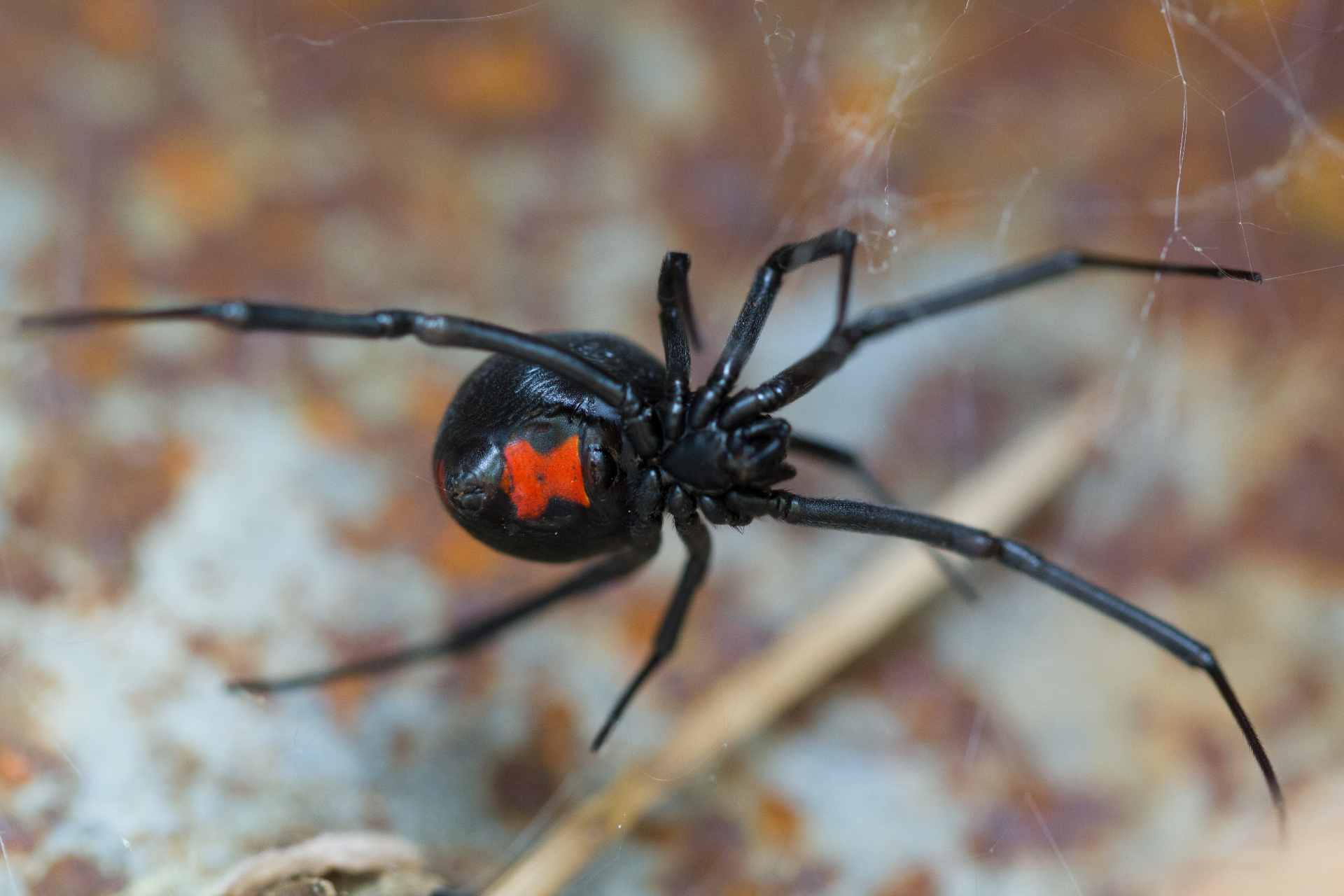
Western Black Widow (Latrodectus hesperus)

Western Black Widow

Latrodectus hesperus
Medically significant
Size
Female body ~1/2 inch; leg span up to 1.5 inches
How to identify
Glossy jet-black body with a bright red hourglass on the underside of the abdomen. Males and juveniles are smaller, tan or brown with cream striping — often mistaken for a different species entirely.
Where it nests
Builds messy, three-dimensional cobwebs low to the ground. Loves undisturbed, dry, dim spaces: window wells, garage corners, cinder-block voids, meter boxes, patio furniture, and the underside of outdoor steps.
Where we see it locally
By far the most common medically significant spider along the Wasatch Front.
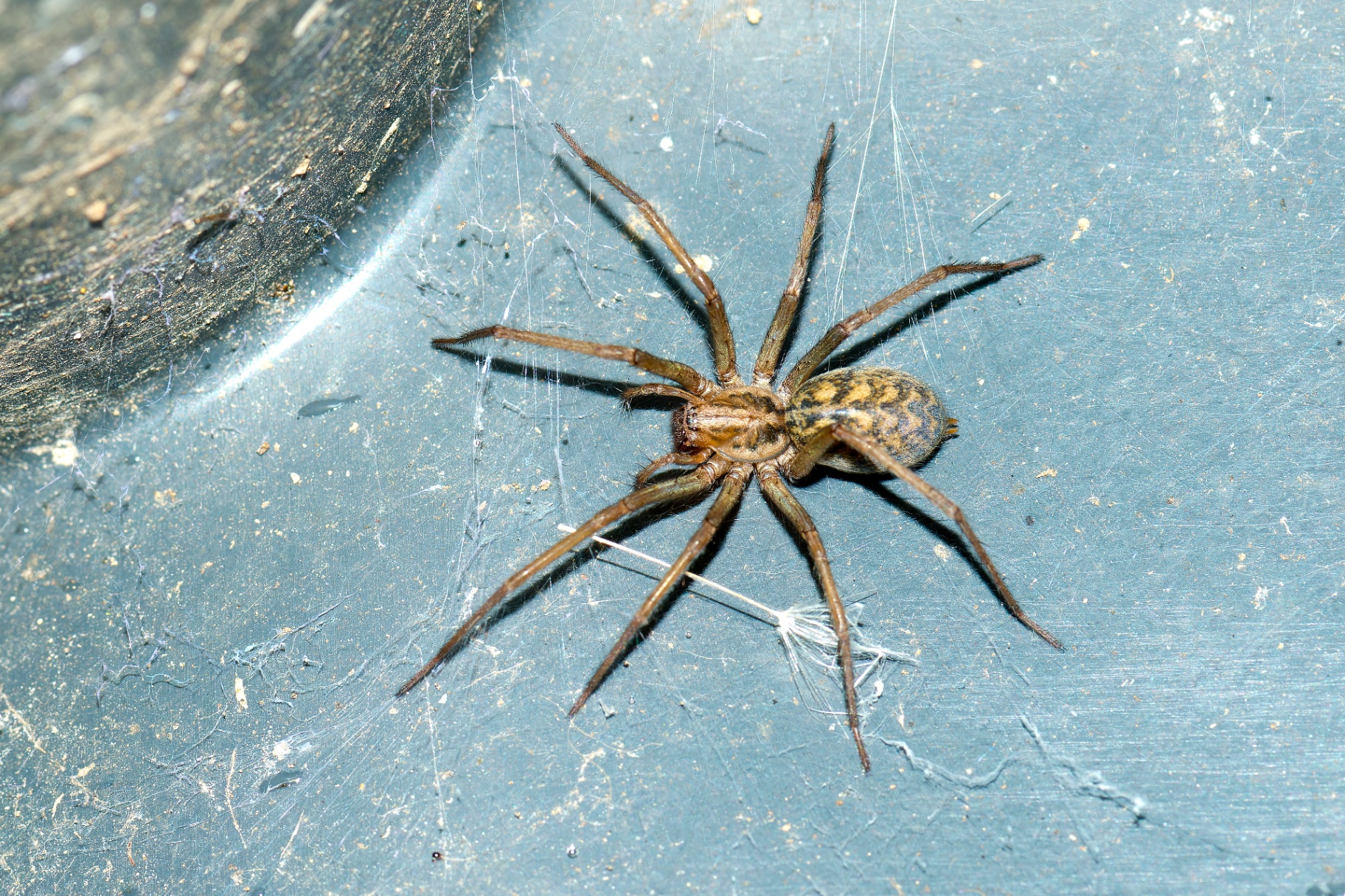
Hobo Spider (Eratigena agrestis)

Hobo Spider

Eratigena agrestis
Nuisance
Size
Body 1/3–2/3 inch; leg span up to 1.5 inches
How to identify
Brown with a subtle herringbone or chevron pattern on the abdomen and uniformly colored legs (no dark bands that is how you separate them from wolf spiders). Fast runners, poor climbers, which is why they show up on floors instead of walls.
Where it nests
Builds a flat, funnel-shaped web with a retreat tunnel at the back. Prefers basements, crawl spaces, garages, wood piles, and gaps behind baseboards. Males wander in late summer looking for mates and are often seen more during this time.
Where we see it locally
Very common in older Salt Lake City, Sugar House and Provo homes with unfinished basements or rock foundations.
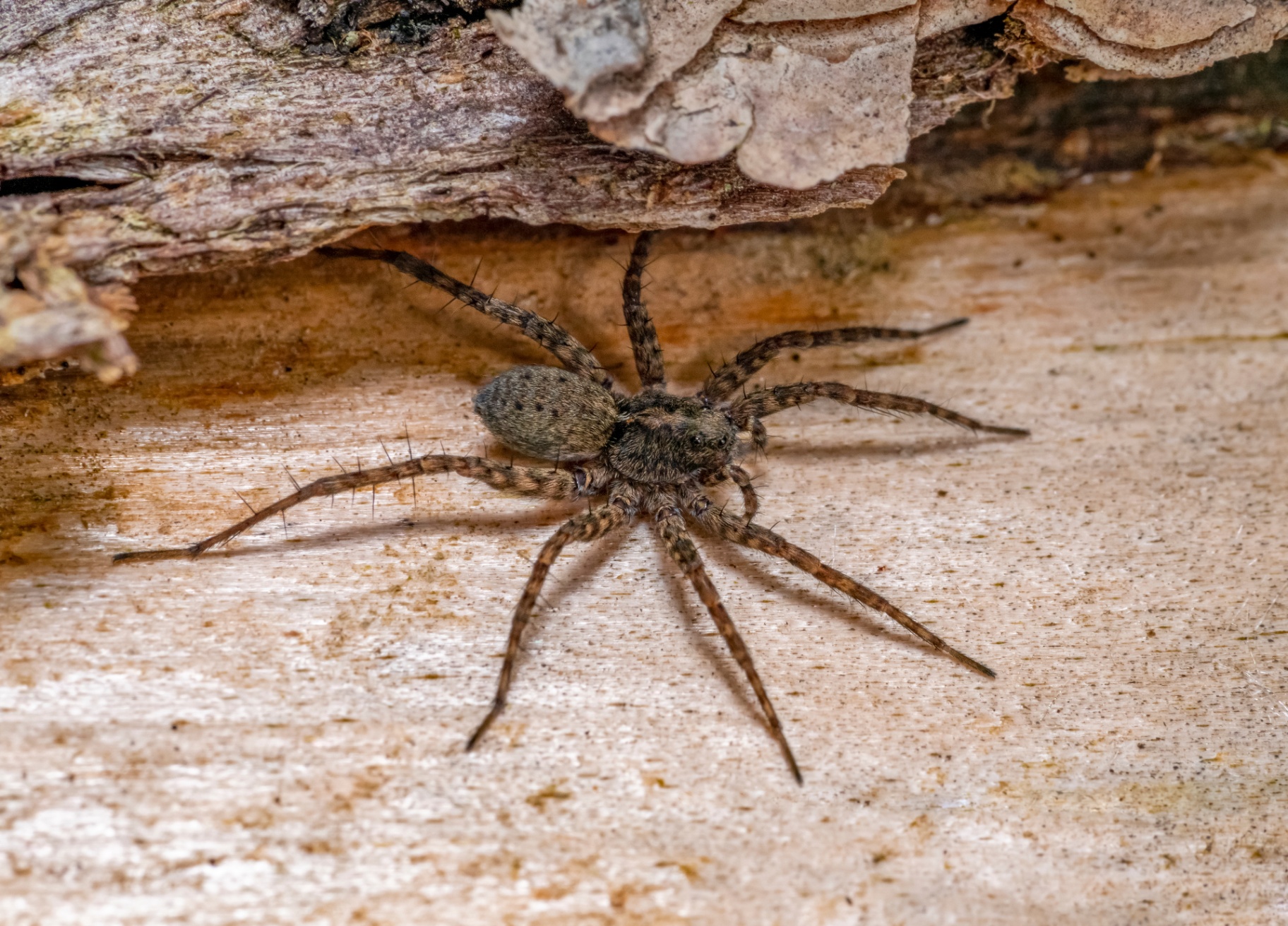
Wolf Spider (Family Lycosidae)

Wolf Spider

Family Lycosidae
Nuisance
Size
Body up to 1 inch; leg span up to 2 inches
How to identify
Large, hairy, mottled brown or gray with darker banding on the legs. Two of their eight eyes are noticeably larger and they shine back at a flashlight. They do not build webs; they hunt on foot.
Where it nests
Ground-level predators. Come inside through door sweeps and garage gaps chasing prey. Hide under furniture, behind boxes, and along the base of exterior walls.
Where we see it locally
The 'giant spider in the basement'.
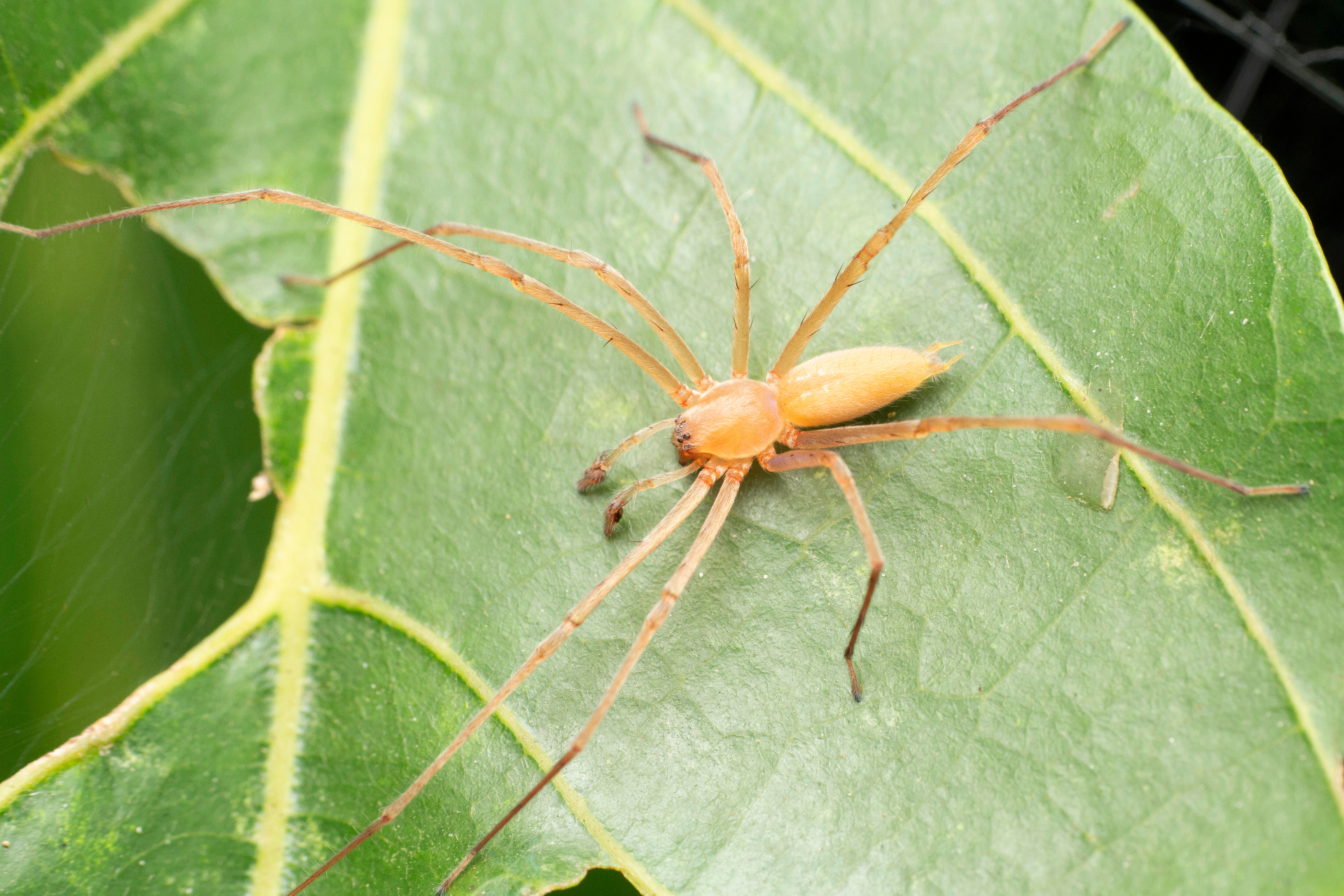
Yellow Sac Spider (Cheiracanthium inclusum)

Yellow Sac Spider

Cheiracanthium inclusum
Medically significant
Size
Body ~1/4 inch; leg span ~1 inch
How to identify
Pale yellow to cream, with slightly darker feet and small dark chelicerae (jaws). Easy to miss because of the size. Responsible for a disproportionate share of indoor spider bites in Utah that are often blamed on brown recluse, which is not actually established here.
Where it nests
Spins a silken sac (not a web) in ceiling-wall corners, behind picture frames, and inside folded laundry. Active hunter at night.
Where we see it locally
Common in newer subdivisions.
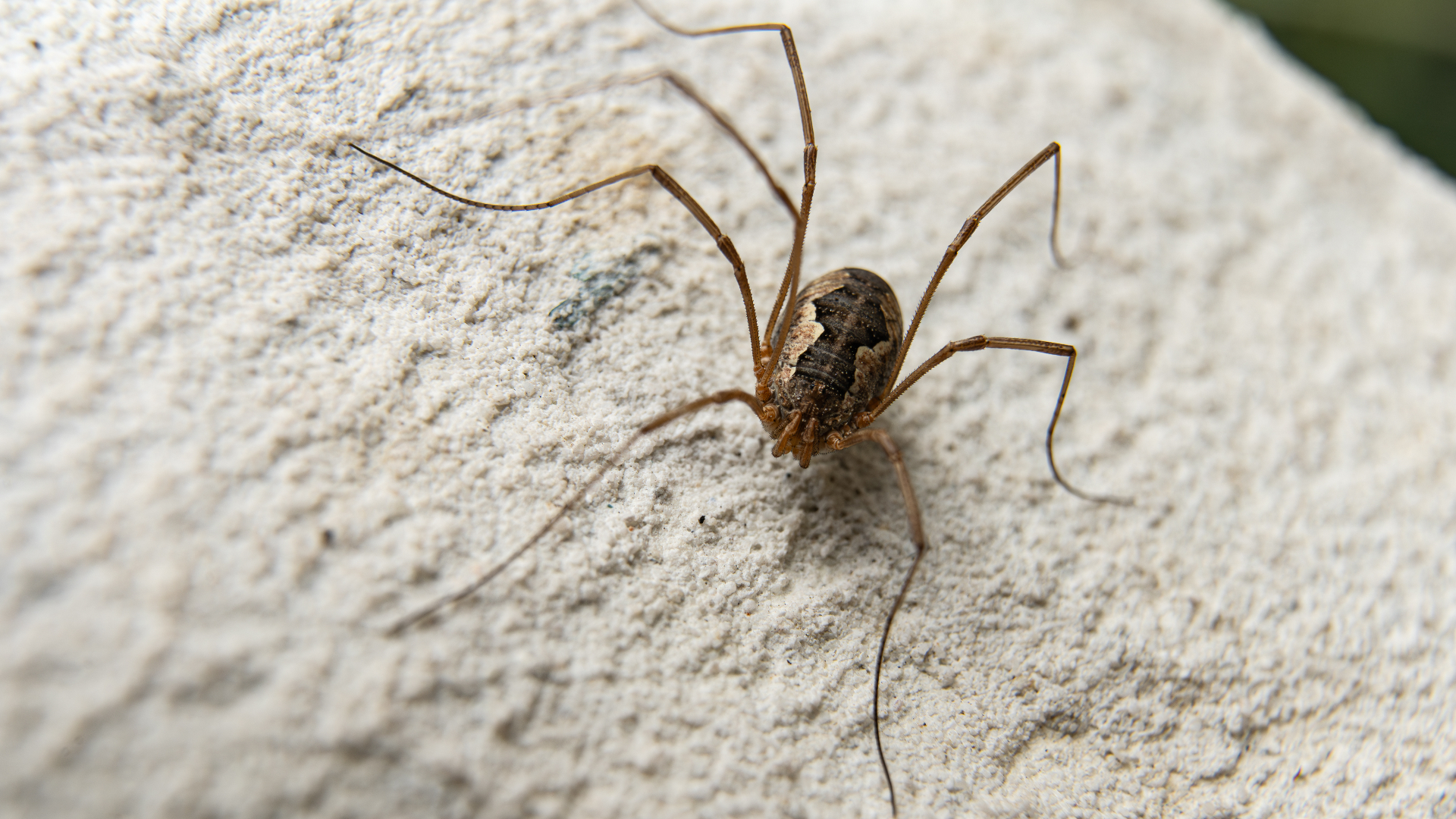
Cellar Spider (Daddy Long-Legs) (Pholcus phalangioides)

Cellar Spider (Daddy Long-Legs)

Pholcus phalangioides
Beneficial
Size
Body ~1/4 inch; leg span up to 2 inches
How to identify
Tiny, pale tan body on impossibly long, thin legs. Vibrates rapidly when disturbed. Not medically significant to humans despite the myth.
Where it nests
Loose, tangled webs in ceiling corners of basements, closets, and garages. Prefers cool, humid, undisturbed spaces.
Where we see it locally
The webs you keep sweeping off basement ceilings.
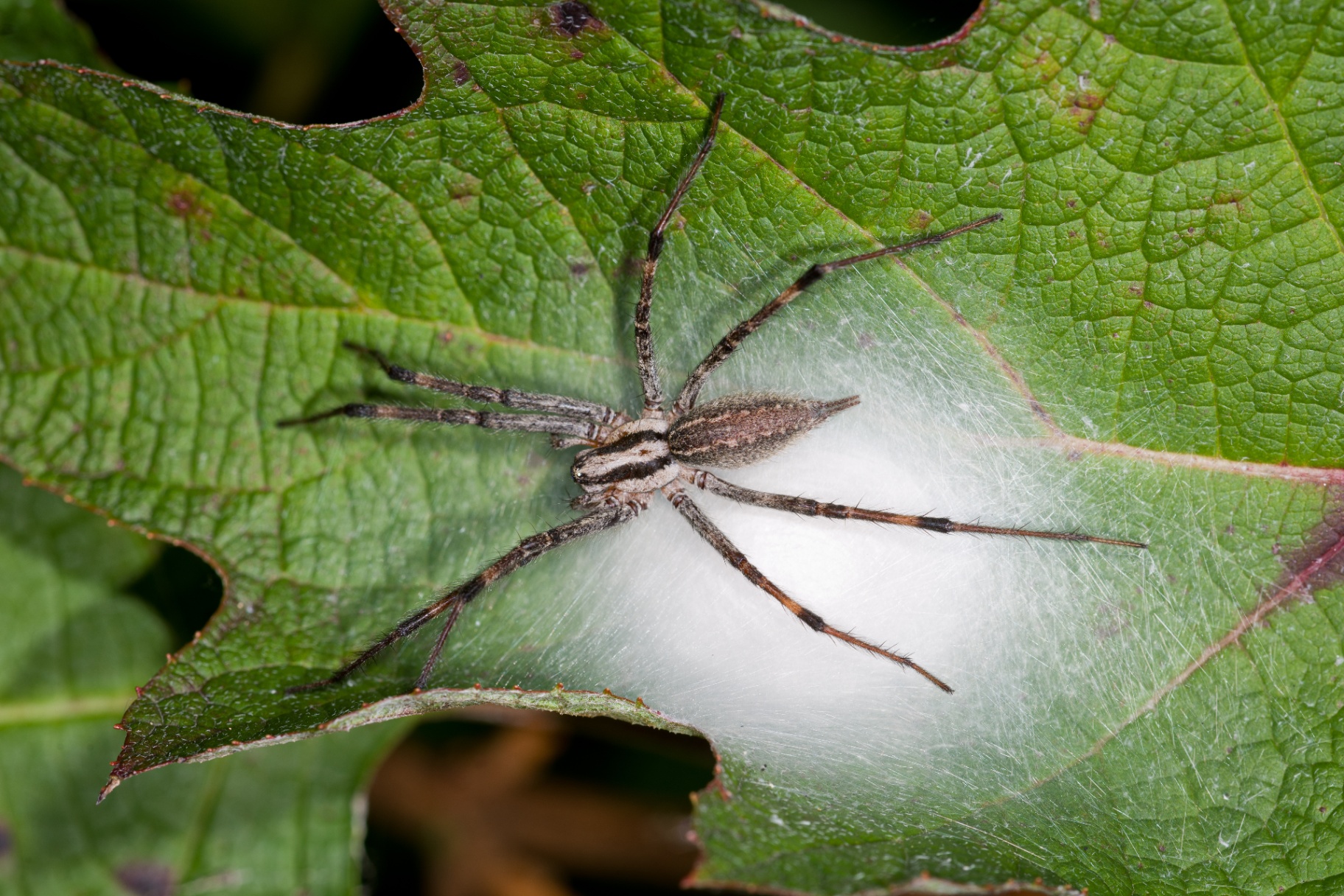
Grass / Funnel Weaver Spider (Family Agelenidae)

Grass / Funnel Weaver Spider

Family Agelenidae
Nuisance
Size
Body 1/3–2/3 inch; leg span ~1 inch
How to identify
Brown with two dark stripes down the cephalothorax. Often confused with hobo spiders — they're close relatives. Builds a distinctive sheet web with a funnel retreat.
Where it nests
Sheet webs across lawns, ground cover, and low shrubs — visible in early morning dew. Occasionally wander indoors through ground-level gaps.
Where we see it locally
The 'lawn full of webs' you notice on August mornings and are mostly outdoor, mostly harmless.

Why Utah homes attract spiders

The Wasatch Front's dry climate, cinder-block basements, and abundance of window wells create ideal harborage with dim, dry, undisturbed spaces and a steady insect food supply. Spider pressure peaks late July through October, when males wander indoors looking for mates and outdoor prey starts to die off.

The three things that cut spider activity fastest

  • Screen and clean out window wells since they're the #1 black widow harborage in Utah homes.
  • Seal garage door sweeps and exterior gaps larger than 1/4 inch. Wolf and hobo spiders walk in at ground level.
  • Knock down webs monthly on the exterior as it forces females to relocate instead of settling in.

Found something you can't identify?

Send us a photo — we'll ID it and tell you whether it warrants a service. Our standard treatment includes dewebbing, eaves, window wells, and a perimeter barrier tuned to Utah's spider pressure.